Tuesday, 15 January 2008

Real heroes


Remember, Remember the 22nd of November
Written by Alan Bellows on November 19th, 2007 at 6:33 pm

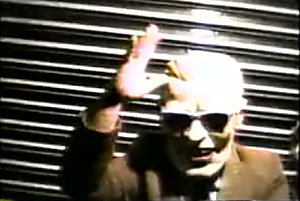
On 22 November 1987, sports anchor Dan Roan of Chicago's WGN-TV News Network was narrating the video of the day's football highlights when something highly unusual happened. The pictures on the station monitors in the studio suddenly began to jitter and twitch. Across Chicago, countless other televisions did the same, as Dan's clips of the Bears game were lost in a brief flurry of static and replaced with the sinister, grinning visage of Max Headroom. Most viewers were familiar with the techno-stuttering character from the recently canceled television program bearing his name, and from advertisements for the New Coke soft drink. But there was something unsettling and surreal about this rubber-masked imposter.

As a low buzzing sound belched from thousands of televisions throughout Chicago, the intruder's image swayed and wiggled in front of a slowly rotating background. Half a minute later, as suddenly as it had appeared, the strange scene was gone. As Chicago's televisions reverted back to the world of the ordinary, the visibly flustered sports reporter reappeared, and commented, "Well, if you're wondering what happened… so am I."

WGN-TV's on-site technicians neutralized the "pirate" transmission by switching to an alternate transmitter, but the attacker's motives and methods were a mystery. It was not the first time a commercial television broadcast had been commandeered, but very few prior attempts had been successful. The previous year a satellite dish salesman going by the fanciful pseudonym "Captain Midnight" had succeeded in briefly replacing HBO's signal with a complaint about their prices, and earlier in 1987 an employee of the Christian Broadcasting Network had hijacked the Playboy Channel's signal. Both of these prior offenders had clear motives, and the authorities had successfully located and prosecuted the troublemakers. But this new instance of signal hacking was much more perplexing.

The Captain Midnight message
In spite of the quick actions of WGN-TV engineers, Chicago had not yet seen the last of of this new signal-plundering pirate. Almost exactly two hours after the first unplanned detour from normality, at 11:15pm, viewers of the PBS affiliate WTTW were absorbing an episode of the British sci-fi series Doctor Who when their TV pictures danced sporadically for a moment. With a randomly gyrating panel of corrugated metal used as a backdrop, the unnerving Max Headroom doppelganger launched into an eccentric diatribe in a highly distorted voice. With no engineers on location at the transmission tower, WTTW employees looked on helplessly as the intruder seized control of their broadcast to say the following:
"He's a freaky nerd!"

"This guy's better than Chuck Swirsky." (a WGN -TV sportscaster at the time)

"Oh Jesus!"

"Catch the wave." (a reference to the New Coke marketing slogan)

"Your love is fading."

(hums the theme song to the 1959 TV series "Clutch Cargo")

"I stole CBS."

(unintelligible)

"Oh, I just made a giant masterpiece printed all over the greatest world newspaper nerds."

"My brother is wearing the other one."

"It's dirty."

"They're coming to get me!"

This symphony of strangeness reached its crescendo when the rubber-masked imposter dropped his trousers, exposed his backside, and weathered a spirited flyswatter spanking from a female assistant. Moments later the picture went dark, and the surreal signal terminated in a flash of static. Viewers were dumped back into the pedestrian world of Doctor Who as though the bizarre buttocks-swatting incident had never happened. Many were confused and troubled by the display. The following day a number of viewers contacted the station to lodge their complaints regarding the "nudity." In a television interview, one flustered Doctor Who fan summed up his reaction: "I got so upset that I wanted to bust the TV set… I really did."

The Federal Communications Commission and the FBI sprang into action, launching independent pirate-hunting squads to unmask the disturbing messenger. It was clear that the fellow had a rare knack for electronics and microwave equipment. WTTW's uplink antenna was atop the 1,454 foot Sears tower in downtown Chicago, and investigators concluded that the "signal pirate" smothered the legitimate broadcast by sending a more powerful signal to this antenna. According to some experts in broadcasting, a rig of sufficient power could be purchased for about $25,000– or perhaps rented for a few thousand dollars– and the disassembled equipment could be transported using a few large suitcases. Agents believed that the perpetrator either beamed his message from the rooftop of an adjacent building, or that he somehow gained access to a powerful ground-based transmitter. But Max had covered his tracks well, there was no clear indication of how he had executed his sophisticated attack.

His motive was even more puzzling than his methods. The enigmatic message may have been due to a grudge against WGN-TV, since the station's call letters stand for "World's Greatest Newspaper," and he makes a reference to "greatest world newspaper nerds"; and he also mentions Chuck Swirsky, another WGN sports reporter at the time. But given the resources and risks involved in commandeering a commercial signal, the message seems disproportionate. At that time, the law allowed for a maximum penalty of $100,000 and one year in prison for such signal piracy. Perhaps the intrusion was merely a proof-of-concept– a precursor of future ambitions– or perhaps there is more meaning to the message than what is immediately evident. The Max Headroom television show had been set in a post-apocalyptic future where evil television corporations controlled the world, and freedom fighters spread their messages by zipping their pirate signal into live television feeds, and this subtle social commentary was not lost on investigators.

Whatever the impostor's intentions, he certainly took significant risks to bring his nebulous message to the televisions of Chicago. The exhaustive investigations by the three-letter agencies turned up nothing substantial, and over time the FCC and FBI resigned their manhunts without any significant insight into who he was, how he did it, or why. To this day the unexplained transmission of 22 November 1987 remains an historic curiosity, since it represents the last such signal of its kind… no other instance of a complete hijacking of a commercial broadcast has occurred in the US in the twenty years since. For now the mysterious masked Max Headroom lookalike remains at large, but his backside may never truly be safe from the mighty flyswatter of justice.


For the video, go here

Monday, 14 January 2008

Smokin'

SELEBI RESIGNS!!!!!!! (yay!)

South African police chief Jackie Selebi has resigned as president of Interpol as he fights corruption allegations, the world police organisation said on Sunday.

It said Selebi had stepped down "in the best interests of Interpol and out of respect for the global law enforcement community that it serves".

South African President Thabo Mbeki placed Selebi on extended leave on Saturday, a day after prosecutors said they would charge the police chief with corruption, fraud, money laundering and racketeering. Selebi denies any wrongdoing.

The scandal comes against the background of political tension in South Africa, where Jacob Zuma -- Mbeki's rival who defeated him in a bruising battle for the leadership of the ruling African National Congress -- will be tried for corruption later this year.

Selebi has long enjoyed Mbeki's backing, but said in his resignation letter to Interpol he had asked the president for extended leave "so that I can devote my energies to clearing my name".

He said he was stepping down with regret because "I do not wish the allegations that have been levelled against me to bring the good work of this august body into disrepute".

In a statement following a series of urgent meetings since Friday, Interpol said the allegations against him had nothing to do with the organisation or with Selebi's position as its head.

Allegations

Secretary General Ronald Noble said that in his experience, Selebi "has always conducted himself and acted in a way to enhance global security and police co-operation worldwide".

Noble said corruption was one of the most serious offences a police official could be accused of.

"Interpol believes that any such allegations should be prosecuted thoroughly, and the proper manner is for charges to be brought promptly before a court of law and not through media leaks and speculation," he added.

A copy of Selebi's indictment, made available to the media by prosecutors, covers a range of charges that include receiving payments from his friend Glenn Agliotti, a convicted drug smuggler accused of playing a role in the 2005 murder of a South African mining magnate.

The indictment said between 2000 to 2005 Selebi received at least 1.2 million rand from Agliotti and his associates, including 30,000 rand from Agliotti a day or two after magnate Brett Kebble was killed.

The period in question overlaps with his tenure at Interpol, where Selebi became president in 2004. He was elected to the post by its general assembly, which brings together delegates from all member states worldwide.

The president is not in charge of Interpol's day-to-day running but presides over meetings of the assembly and executive committee and plays a major role in setting direction and strategy. Selebi's four-year term was due to end this year.

Summin i did write ... seems appropriate

the stench pervades all
entering all thoughts, hopes and dreams
providing us with our own
giving nothing taking all
the people walking by
their thoughts veiled
their motives unclear
living walking breathing
living the pantomime
the joke is lost in the anguish
the mothers screaming lost in the wind
blown forever without ears to hear
soul to care
the snot nosed ignorant
the seconds ticking by
fat rich men living in bestial bliss
the others in hell
god all merciful man merciless
the light dimly glowing
all striving to attain
that mediocum of honour
the badge we all want
to enamour us of others
clawing our way to desire
the eyes of the beast watching waiting
driving us forward as cattle
to the slaughter
striped toothpaste and nuclear war
another dead another bed
overpopulation hunger
we live our lives ever forward
the past ever present
haunting our souls
dimming our eyes
pills and booze dull us
promising that eternal peace
prolonging our agony
making our beds of hate and pain and regret
a flower radiant in the sun ...
a sunbeam on a cloudy day
end start again
the seasons heedless

Thursday, 10 January 2008

Albert Einstein - philosopher

1. A person who never made a mistake never tried anything new.

2. Education is what remains after one has forgotten what one has learned in school.

3. I am enough of an artist to draw freely upon my imagination. Imagination is more important than knowledge. Knowledge is limited. Imagination encircles the world.

4. The secret to creativity is knowing how to hide your sources.

5. The value of a man should be seen in what he gives and not in what he is able to receive. Try not to become a man of success, but rather try to become a man of value.

6. There are two ways to live: you can live as if nothing is a miracle; you can live as if everything is a miracle.

7. When I examine myself and my methods of thought, I come to the conclusion that the gift of fantasy has meant more to me than any talent for abstract, positive thinking.

8. In order to be an immaculate member of a flock of sheep, one must above all be a sheep oneself.

9. You have to learn the rules of the game. And then you have to play better than anyone else.

10. The important thing is not to stop questioning. Curiosity has its own reason for existing.

Thanks to Dion, i plagiarised again, except i didn't bother to include his explanations for the statements, if these need to be explained to you, you're past your should be dead by now date.

Einstein is remembered for his thinking, smart guy and all that. What he was better at than science, was humanity. He is fast becoming my favourite philosopher, because despite the HUGE brain the guy had, he sums things up so simply, so directly, a child could understand him.

Cops

http://1.bp.blogspot.com/_Mvhjidbvdzc/R4MQglMxM1I/AAAAAAAADcI/CvtQP0nNtk4/s1600/belgian.jpg

Holy BELGIUM man!!!!!!!
There is not a car on the planet that can outrun one of these.

2008

Dizzy Dee posted to ask if i'd written the last post, Jus' Thinkin.
Good lord no!! I wish i had the imagination and talent to come up with that. Alas i sit here and think about all the things i'm not writing about. There are a lot of things i want to say, like about the ANC, and my life, and other stuff. Problem is, i'm at a really bad place lately, and everything i have to say about the world is pretty much bad. So i'd rather use this blog as a forum to display bits and bytes of what i think is worth thinking about, at least.
This is the crappiest year i've ever had, already.
Wife left me, then returned. Of course she left me with the kids, who were hysterical.
My maid's 4 year old grandchild drowned in my pool .... Lesego RIP.
I was driven into on the bike this morning, in the rain.
Um .... i really don't want sympathy, but same time i don't really want to even think about me, or my life, or my immediate environment.
OMG this life just gets better every day don't it?
Peace

Friday, 4 January 2008

Jus' Thinkin'

A story from a friend:
It started out innocently enough. I began to think at parties now
and then -- just to loosen up. Inevitably, though, one thought led to
another, and soon I was more than just a social thinker.
I began to think alone -- "to relax," I told myself -- but I knew it
wasn't true. Thinking became more and more important to me, and
finally I was thinking all the time.
That was when things began to sour at home. One evening I turned off
the TV and asked my wife about the meaning of life. She spent that
night at her mother's.
I began to think on the job. I knew that thinking and employment
don't mix, but I couldn't help myself.
I began to avoid friends at lunchtime so I could read Thoreau, Muir,
Confucius and Kafka. I would return to the office dizzy and confused,
asking, "What is it exactly we are doing here?"
One day the boss called me in. He said, "Listen, I like you, and it
hurts me to say this, but your thinking has become a real problem.
If you don't stop thinking on the job, you'll have to find another job."
This gave me a lot to think about. I came home early after my
conversation with the boss. "Honey," I confessed, "I've been
thinking..."
"I know you've been thinking," she said, "and I want a divorce!"
"But Honey, surely it's not that serious."
"It is serious," she said, lower lip aquiver. "You think as much as
college professors and college professors don't make any money, so
if you keep on thinking, we won't have any money!"
"That's a faulty syllogism," I said impatiently.
She exploded in tears of rage and frustration, but I was in no mood
to deal with the emotional drama.
"I'm going to the library," I snarled as I stomped out the door. I
headed for the library, in the mood for some Nietzsche. I roared
into the parking lot with NPR on the radio and ran up to the big
glass doors. They didn't open. The library was closed.
To this day, I believe that a Higher Power was looking out for me that night.
Leaning on the unfeeling glass, whimpering for Zarathustra, a
poster caught my eye, "Friend, is heavy thinking ruining your life?"
it asked.
You probably recognize that line. It comes from the standard Thinkers
Anonymous poster.
This is why I am what I am today: a recovering thinker. I never miss
TA meeting. At each meeting we watch a non-educational video; last week it was "Porky's."
Then we share experiences about how we avoided thinking
since the last meeting.
I still have my job, and things are a lot better at home. Life just
seemed easier, somehow, as soon as I stopped thinking. I think the
road to recovery is nearly complete for me.
Today I took the final step...
I joined the ANC.

Thursday, 3 January 2008

Home of the braves

Short intro: this is the most exciting piece of news i have heard for a very long time.
From: Republic of Lakotah

Notice to All Foreign Governments and Private Owners
of Real Estate within the Republic of Lakotah Download this PDF File

Republic of Lakotah

P.O. Box 99
Porcupine, SD 57772
605-867-1111
www.republicoflakotah.com
Info@republicoflakotah.com

JAN 1, 2008

Notice to All Foreign Governments and Private Owners of Real Estate within the Republic of Lakotah

TO:

The United States of America;

The States of: Montana, Wyoming, North Dakota, South Dakota and Nebraska;

The County and Municipal Governments Operating within the Republic of Lakotah; and All Private Owners of Real Estate within the Republic of Lakotah

Lakotah, through its government, have appointed representatives to withdraw from all the treaties with the United States of America.

Lakotah, through such representatives, have formally withdrawn from all agreements and treaties with the United States of America. The reinstitution of our freedom and independence is found in law.

Lakotah has reclaimed sovereignty as a nation and over its traditional lands.

Despite many years of repeated bad faith on the part of the United States government towards the Lakotah People, the Lakotah hold no animosity toward the American people, most of whom have had no part in the actions of their government. We wish to deal with the American people in good faith and in a win-win manner.

While we have the right to impose liens on all of the real estate in our country, we prefer to come to resolutions with you all with out resorting to such measures. Accordingly, at this time, we are only declaring liens on real estate held by governments foreign to the Republic of Lakotah, but not on real estate held by private parties.

The Declaration of Independence, the Constitution of the United States of America and the Vienna Convention on the Law of Treaties substantiate this freedom.

Lakotah welcomes the opportunity to meet and discuss this matter. We are in the process of scheduling meetings and will issue public invitations. Should you desire input with regard to scheduling these meetings, please contact us at the above.

Russell Means, Chief Facilitator
Provisional Government
Republic of Lakotah

Russel Means

Home of the braves

Friday, 21 December 2007

Season of the Bike

by Dave Karlotski

There is cold, and there is cold on a motorcycle. Cold on a motorcycle is like being beaten with cold hammers while being kicked with cold boots, a bone bruising cold. The wind's big hands squeeze the heat out of my body and whisk it away; caught in a cold October rain, the drops don't even feel like water. They feel like shards of bone fallen from the skies of Hell to pock my face. I expect to arrive with my cheeks and forehead streaked with blood, but that's just an illusion, just the misery of nerves not designed for highway speeds.

Despite this, it's hard to give up my motorcycle in the fall and I rush to get it on the road again in the spring; lapses of sanity like this are common among motorcyclists. When you let a motorcycle into your life you're changed forever. The letters "MC" are stamped on your driver's license right next to your sex and height as if "motorcycle" was just another of your physical characteristics, or maybe a mental condition.

But when warm weather finally does come around all those cold snaps and rainstorms are paid in full because a motorcycle summer is worth any price. A motorcycle is not just a two-wheeled car; the difference between driving a car and climbing onto a motorcycle is the difference between watching TV and actually living your life. We spend all our time sealed in boxes and cars are just the rolling boxes that shuffle us languidly from home-box to work-box to store-box and back, the whole time entombed in stale air, temperature regulated, sound insulated, and smelling of carpets.

On a motorcycle I know I'm alive. When I ride, even the familiar seems strange and glorious. The air has weight and substance as I push through it and its touch is as intimate as water to a swimmer. I feel the cool wells of air that pool under trees and the warm spokes of sunlight that fall through them. I can see everything in a sweeping 360 degrees, up, down and around, wider than PanaVision and higher than IMAX and unrestricted by ceiling or dashboard.

Sometimes I even hear music. It's like hearing phantom telephones in the shower or false doorbells when vacuuming; the pattern-loving brain, seeking signals in the noise, raises acoustic ghosts out of the wind's roar. But on a motorcycle I hear whole songs: rock 'n roll, dark orchestras, women's voices, all hidden in the air and released by speed.

At 30 miles an hour and up, smells become uncannily vivid. All the individual tree-smells and flower-smells and grass-smells flit by like chemical notes in a great plant symphony. Sometimes the smells evoke memories so strongly that it's as though the past hangs invisible in the air around me, wanting only the most casual of rumbling time machines to unlock it.

A ride on a summer afternoon can border on the rapturous. The sheer volume and variety of stimuli is like a bath for my nervous system, an electrical massage for my brain, a systems check for my soul. It tears smiles out of me: a minute ago I was dour, depressed, apathetic, numb, but now, on two wheels, big, ragged, windy smiles flap against the side of my face, billowing out of me like air from a decompressing plane. Transportation is only a secondary function. A motorcycle is a joy machine. It's a machine of wonders, a metal bird, a motorized prosthetic. It's light and dark and shiny and dirty and warm and cold lapping over each other; it's a conduit of grace, it's a catalyst for bonding the gritty and the holy.

I still think of myself as a motorcycle amateur, but by now I've had a handful of bikes over a half dozen years and slept under my share of bridges. I wouldn't trade one second of either the good times or the misery. Learning to ride was one of the best things I've done.

Cars lie to us and tell us we're safe, powerful, and in control. The air-conditioning fans murmur empty assurances and whisper, "Sleep, sleep." Motorcycles tell us a more useful truth: we are small and exposed, and probably moving too fast for our own good, but that's no reason not to enjoy every minute of the ride.

Thursday, 20 December 2007

Humans remain the strangest animals

Meet the shepherd who herds with his car

December 19 2007 at 06:08PM

Paris - A selection of unusual animal goings-on in 2007:

Heavily-armed police surrounded a bank branch in the Philippines after a jangling alarm alerted them to movements inside it. When all exits but one had been closed off, and the police piled in for the expected showdown with armed robbers, a stray cat sauntered out. It had set off the alarm after getting in through a small hole in the roof.

Among recipients of the spoof "Ignobel" awards for zany science, handed out each year at the time of the real Nobel prizes, was one for a research team which ascertained that hamsters could more easily get over jet-lag when given the sexual impotence drug Viagra. Another winning team tried to find out whether rats could distinguish between Japanese and Dutch when spoken backwards - they couldn't.

A pet cat taken to a veterinary clinic in Australia with dilated pupils, a racing heart and agitated movements, turned out to be high on cocaine and other drugs left around after a party. It recovered.

In Sweden, the risks involved in giving medical treatment to large animals were illustrated when a giraffe collapsed on zoo officials who were trying to anaesthetise it. The boss of the zoo suffered concussion, while the unfortunate giraffe died from its fall.

Hedgehogs are a threatened species on the British mainland, where they notably get run over by cars, but they are far too numerous on the remote Scottish island of Uist, where they eat the eggs of rare birds. When animal lovers got upset about the local practice of culling the prickly creatures, the local authorities simply decided to round them up alive, take them across the water and release them.

Security officials taking part in an anti-corruption drive in Bangladesh were called to the home of a former government minister not to seize ill-gotten luxury goods, but to confiscate an impressive menagerie. Animals kept illegally in the man's home included four deer, seven peacocks, two emus and various other rare birds.

A 17-year-old tame cockatoo at a wildlife sanctuary in England decided that a bowl of chocolate Easter eggs was the real thing, and spent two weeks sitting on them, officials said.

Officials from a town in Australia's tropical north Queensland region suggested that local golfers could try practicing their drives on cane toads - an introduced species that has become a notorious pest. Animal rights defenders were not amused.

Fishery officials in China restocked a river with 13 truckloads of live carp, only to realise that thousands of residents from a nearby city had immediately swarmed to the banks a short way downstream and caught almost all of them.

The rustic image of the traditional sheep-herder took a hit in Greece, when it emerged that a shepherd in the centre of the country had simply trained his flock to follow his car. Getting on in years, the resourceful herder was no longer able to walk alongside the animals.

A bird hunter in the US state of Ohio suffered the indignity of being shot in the leg by one of his own dogs. As he was retrieving a bird, the dog stepped on the trigger of his gun, which was lying on the ground and pointing in his direction.

In a bid to emulate the "Hollywood Walk of Fame" in Los Angeles, dog fanciers in London inaugurated a canine version. Many of the first inductees were in fact fictional creatures, including the film stars Lassie and Fang, the latter from the "Harry Potter" stories. But fans of the Belgian boy detective Tintin, a cartoon character, regretted the omission of his dog, Snowy.

Meanwhile a real-world dog, a Maltese called Trouble, was reported to have been removed from her residence in New York and taken to live at an undisclosed location in Florida. Trouble became probably the richest canine in the world when her late mistress, controversial hotel heiress Leona Helmsley, left her 12 million dollars in her will. The dog's keepers explained that she had received death threats in New York.

Oh dear ... this is bad

Scorpions stamped out

December 20 2007 at 07:18AM

By Political Bureau

The days of the elite crime-fighting unit, the Scorpions, are numbered.

The Scorpions will be disbanded by June next year at the latest, according to discussions at the ANC's national conference on Wednesday.

It is not clear what the effect will be on pending cases, especially into police chief Jackie Selebi and ANC president Jacob Zuma.

Scorpions investigators will find a new home in the SA Police Service, while their prosecutors will remain in the National Prosecuting Authority and the justice department.

The news on the fate of the Scorpions emerged after the peace and stability commission agreed at the ANC's conference on Wednesday that the unit be disbanded.

Safety and Security Minister Charles Nqakula confirmed that the commission had met and that it had endorsed the ANC's June policy conference proposal. All that remains is the official stamp of approval, when the proposal is put before the ANC conference plenary for the final decision.

"The commission has taken the decision to dissolve the Scorpions, but the conference ultimately decides," Nqakula said.

On Wednesday, ANC delegates attending the commission said the view was that the Scorpions were responsible for their own downfall.

The perception that the crimefighting unit was used by senior government officials to target Zuma was said to be one of the principal reasons for its demise.

The unit has often been claimed to be an example of President Thabo Mbeki's alleged abuse of power.

The failure of the Khampepe Commission and the perception that the Presidency had intervened to stop suspended National Director of Public Prosecutions Vusi Pikoli from arresting Selebi on several charges were cited as other reasons for Wednesday's decision.

The ANC is also expected to call for the metro police to fall under the command of the police commissioner.

Wednesday, 19 December 2007

Bring back the death penalty

Vandals deface ancient San rock art site
December 19 2007 at 11:00AM

By Aeysha Kassiem

Valuable rock art that paints the colourful history of the country's past is being defaced.

While rock art sites - painted by the San up to 6 000 years ago - throughout the Western Cape are protected by the National Monuments Council (NMC), a rock art site in Elands Bay has been scribbled over.

An NMC sign close to the site reads: "The Elands Bay cave rock paintings reflect the religious experiences and beliefs of the San (Bushmen) whose ancestors lived in this area for more than 20 000 years.

"Please enjoy looking at the art but do not touch the paintings or deface them and the other rocks in the vicinity in any way. Wetting the paintings is particularly harmful."

The NMC no longer exists and has been replaced by provincial resource heritage authorities.

The Clanwilliam Municipality did not respond to messages left by the Cape Times.

Director for arts, culture, language and heritage at the provincial department of cultural Affairs and Sports, Jane Moleleki, said on Tuesday it was the first time she had been informed of the damage. She urged the public to respect the province's heritage.

"Rock art is our heritage in the Western Cape. It has to be preserved and should be protected. If there is vandalism, the department will have to look into it."

She said accessibility to the site is usually what affected its protection.

"It does depend, to some degree, on where it is situated - whether there is easy access then it makes it easier for vandals. Other sites are on private property."

Asked whether cleaning the vandalised rock art also affected the paintings, she said it depended on how the piece had been vandalised. Sometimes specialists had to be brought in.

"We need to educate people through community participation and explain to them the significance of rock art and how it contributes to our heritage and its importance."

aeysha.kassiem@inl.co.za

http://www.lonker.net/art_african_1.htm

Tuesday, 18 December 2007

More maths (?)

Monkeys ace mental maths test
18/12/2007 07:50 - (SA)

Chicago - A college education doesn't give you much of an edge over a monkey when it comes to doing some basic arithmetic, according to a study released on Monday that underscores the surprising mental agility of our simian relatives.

In a rapid fire test of mental addition, monkeys performed almost as well as college students, showing they're no slouches when it comes to number crunching.

The macaques got their sums right 76% of the time, while the students got the correct answer 94% of the time in a series of increasingly challenging maths tests.

"We know that animals can recognise quantities, but there is less evidence for their ability to carry out explicit mathematical tasks, such as addition," said Jessica Cantlon, a researcher at Duke University Centre for Cognitive Neuroscience in Durham, North Carolina.

"Our study shows that they can."

The study in the Public Library of Science Biology comes just a couple of weeks after Japanese researchers revealed that young chimps outperformed college students in tests of short-term memory.

The young chimps surprised the Japanese investigators by being able to retrace patterns of numbers flashed up on a computer screen faster than their human rivals.

The current study, according to researchers, goes one step further by showing that primates can process information as well as reproduce it, and that there's more to our closest living relatives than "monkey see, monkey do."

Evolutionary past

It also suggests that basic arithmetic may be part of our shared evolutionary past.

"Humans have some pretty sophisticated problem-solving skills, but this study suggests they may also be able to tap into some primitive method of making calculations," said Carlton.

She said the assumption is that the monkeys are using the same kind of primitive non-verbal mathematics.

For the test, the monkeys and students were seated at a computer and shown a screen with a certain amount of dots, followed by a screen with another amount of dots.

The third screen contained two boxes, one containing the sum of the first two sets of dots, and one containing a different number. The monkeys were rewarded with the soft drink, Kool-Aid, for selecting the box containing the correct sum of the sets.

The students were told not to verbally count the dots.

The average response time for both the college students and the macaques was one second, and at least in one other respect, their performance was surprisingly similar.

Both the monkeys and the students took longer to make a choice and made more mistakes when the two choice boxes were close in number.

"We call this the ratio effect," said Cantlon. "What's remarkable is that both species suffered from the ratio effect at virtually the same rate." - Sapa-AFP
____________________________________________________________________

I'm confused.

Friday, 14 December 2007

Wednesday, 12 December 2007

Mathematics

'Mathlete' breaks own record
11/12/2007 21:11 - (SA)

London - The world's fastest human calculator on Tuesday broke his own record for working out a 200-digit number using nothing but brainpower to produce the answer in just over 70 seconds.

Alexis Lemaire, a 27-year-old Frenchman, correctly calculated the 13th root of a random 200-digit number from a possible 393 trillion answers.

The so-called 'mathlete' produced the answer of 2 407 899 893 032 210 in 70.2 seconds, beating his previous record of 72.4 seconds, at London's Science Museum.

A computer was used to produce a random 200-digit number before he sat down to calculate the answer in his head.

The museum's curator of mathematics, Jane Wess, said: "He sat down and it was all very quiet - and all of a sudden he amazingly just cracked it.

"I believe that it is the highest sum calculated mentally.

"He seems to have a large memory and he's made this his life's ambition. It's quite remarkable to see it happen. A very small number of people have this extraordinary ability; nowadays there is only a handful."

Lemaire, who attends the University of Reims in northern France, began demonstrating his prowess by finding the 13th root of a random 100-digit number but gave up trying to improve his performance when he calculated an answer in under four seconds in 2004.

Like an athlete, he trains his brain daily for the far harder task of finding the 13th root of 200-digit numbers.

Tuesday, 11 December 2007

Friday, 7 December 2007

We mourn the death of ...

London Times Obituary for Mr. Common Sense:

'Today we mourn the passing of a beloved old friend, Common Sense, who has been with us for many years. No one knows for sure how old he was, since his birth records were long ago lost in bureaucratic red tape. He will be remembered as having cultivated such valuable lessons as: * Knowing when to come in out of the rain;* why the early bird gets the worm;* Life isn't always fair;* and maybe it was my fault.

Common Sense lived by simple, sound financial policies (don't spend more than you can earn) and reliable strategies (adults, not children, are in charge). His health began to deteriorate rapidly when well-intentioned but overbearing regulations were set in place. Reports of a 6-year-old boy charged with sexual harassment for kissing a classmate; teens suspended from school for using mouthwash after lunch; and a teacher fired for reprimanding an unruly student, only worsened his condition.

Common Sense lost ground when parents attacked teachers for doing the job that they themselves had failed to do in disciplining their unruly children. It declined even further when schools were required to get parental consent to administer sun lotion or an Elastoplast to a student; but could not inform parents when a student became pregnant and wanted to have an abortion.

Common Sense lost the will to live as the Ten Commandments became contraband; churches became businesses; and criminals received better treatment than their victims. Common Sense took a beating when you couldn't defend yourself from a burglar in your own home and the burglar could sue you for assault. Common Sense finally gave up the will to live, after a woman failed to realize that a steaming cup of coffee was hot. She spilled a little in her lap, and was promptly awarded a huge settlement.

Common Sense was preceded in death by his parents, Truth and Trust; his wife, Discretion; his daughter, Responsibility; and his son, Reason. He is survived by his 4 stepbrothers; I Know My Rights, I Want It Now, Someone Else Is To Blame, and I'm A Victim.

Not many attended his funeral because so few realized he was gone. If you still remember him, pass this on. If not, join the majority and do nothing.' And a little extra.....................

Thursday, 6 December 2007

Blogging

Wow. I made over 2000 hits :D, it's been going a long time now for me. A couple of things have changed, not all or the better, but not all bad either.
I copy and paste TOO MUCH now, instead of creating essays. Partly becauseit takes a lot of energy, and i'm lazy, but partly because i want what's here to be good, mostly. When i look and ealuate my environment, little to smile about.
Seriously, traffic - bad, work - dull, politics - scary, religion - absurd.

I try keep positive, but same time sometimes all i can do is say "LOOK".
Some of the shit going on in the place is beyond words.

I'm just keeping on, i suspect that one day i'll look back and think that thee really are the golden years, halcyon days.

I'll keep going, hopefully for some time.

Peace

lovely


From Sarah van Zyl

Monday, 3 December 2007

Last ride for Evel Knievel, man of steel and scars


Daredevil motorcyclist Evel Knievel is seen in 1977 in the Warner Brothers movie "Viva Knievel!".

EVEL Knievel, the hard-living, death-defying adventurer who went from stealing motorcycles to riding them in a series of spectacular airborne stunts in the 1960s and '70s, has died. He was 69.

Knievel had been in failing health for years with diabetes and idiopathic pulmonary fibrosis, an incurable lung condition. In 1999 he underwent a liver transplant after nearly dying of hepatitis C, which he believed he had contracted through a blood transfusion after one of many violent spills.

Only days before his death, he and rap artist Kanye West settled a lawsuit over West's use of Knievel's trademarked image in a music video.

Knievel amazed and horrified onlookers in 1968 by vaulting his motorcycle 45 metres over the fountains of Caesars Palace in Las Vegas, only to land in a bone-breaking crash.

He continued to win fame and fortune by getting huge audiences to watch him roar his motorcycle up a ramp, fly over 10, 15 or 20 cars parked side by side and come down on another ramp. Perhaps his most spectacular stunt, another disaster, was an attempt to jump an Idaho canyon on a rocket-powered motorcycle in 1974.

Knievel's showmanship, skill and disdain for death were so admired that he became a folk hero.

Performing stunts hundreds of times, Knievel repeatedly shattered bones as well as his bikes. When he was forced to retire in 1980, he told reporters that he was "nothing but scar tissue and surgical steel".

He underwent as many as 15 major operations to relieve severe trauma and repair broken bones — skull, pelvis, ribs, collarbone, shoulders and hips. "I created the character called Evel Knievel, and he sort of got away from me," he said.

His health was also compromised by years of heavy drinking; he said at one point he was consuming half a bottle of whiskey a day, washed down with beer chasers.

Robert Craig Knievel was born in the copper-mining town of Butte, Montana, and raised by grandparents.

As he told the story, he acquired the name Evel as a boy. Arrested for stealing hubcaps, he was taken to jail, where the police were holding a man named Knofel, whom they called "Awful Knofel".

They decided to call Robert "Evil Knievel". The name stuck, and some years later, Knievel legally took the name Evel, changing the "i" to "e" because he thought it looked better.

A star athlete at school, he volunteered to be an army paratrooper in the 1950s and made 30 jumps. Afterwards he played hockey with the Charlotte Clippers. Then he took up motorcycle racing until falling and breaking bones in a 1962 race.

At 27, he became co-owner of a motorcycle shop. To attract customers, he announced he would jump 12 metres over parked cars and a box of rattlesnakes and continue on past a mountain lion tethered at the other end. Before a thousand people, he did the stunt but failed to fly far enough; his bike came down on the rattlesnakes. The audience was in awe.

"Right then," he said, "I knew I could draw a big crowd by jumping over weird stuff."

He hit the big time in 1968 with his jump over the fountains at Caesars Palace. "It was terrible," he said afterward. "I lost control of the bike. Everything seemed to come apart. I kept smashing over and over and ended up against a brick wall, 165 feet away."

The accident left him with a fractured skull and broken pelvis, hips and ribs. He was unconscious for a month. But soon after his recovery, he jumped 52 wrecked cars at the Los Angeles Coliseum.

In 1974, Knievel decided to jump almost 500 metres across the Snake River canyon in Idaho. Before thousands of spectators , he took a rocket-powered motorcycle up a long ramp at 560 km/h and soared some 600 metres above the canyon. But his parachute opened prematurely, and he and the cycle drifted to the canyon floor, leaving him without serious injury. He made $US6 million.

He also made a great deal of money the next year when he jumped over 13 double-decker buses in London. He crashed there, too, breaking pelvis, vertebrae and hand.

In Chicago, he soared over an aquarium tank containing 13 sharks but skidded on the exit ramp and fractured his right forearm and his left collarbone.

In 1986, he was fined $US200 in Kansas City, on charges of soliciting an undercover policewoman for immoral purposes. And in 1995, after leaving his wife of 38 years and living with Krystal Kennedy, a younger woman, Knievel was charged with assaulting her. Kennedy ultimately declined to press charges, however, and married him in 1999.

Evel Knievel once described himself as "the last gladiator in the new Rome".

"I am a guy who is first of all a businessman," he once said. "I'm not a stunt man. I'm not a daredevil. I'm" — he paused — "I'm an explorer."

NEW YORK TIMES

■ Knievel played himself in the 1977 movie Viva Knievel! The plot featured a rival trying to kill Knievel and use his 18-wheel truck to smuggle cocaine. George Hamilton portrayed him in a 1971 film and George Eads played him in a 2004 television movie.

■ Among Knievel's notable feats were clearing 19 cars, sailing over 13 Mack trucks and jumping 13 double-decker buses in London, as well as a failed attempt to leap the Snake River canyon in Idaho on a rocket-powered motorcycle.

■ A jailer in Montana was responsible for Knievel's nickname. As a youth, Knievel had several run-ins with police and the jailer dubbed him "Evil Knievel". In order not to be perceived as a bad guy, Knievel later changed the spelling to "Evel" as his daredevil career took off.

It’s said Evel Knievel often quoted (and lived…) the words of Theodore Roosevelt: ‘Far better it is to dare mighty things, to win glorious triumphs, even though chequered by failure, than to rank with those poor spirits who neither enjoy nor suffer much because they live in the gray twilight that knows neither victory nor defeat.’ Amen.

_______________________________________________________________________

One of the last great men of our time, fearless.

Thursday, 29 November 2007

Monday, 26 November 2007

Friday, 23 November 2007

Streetkids

Where are Durban's street children?
November 22 2007 at 10:21AM
By Sharlene Packree and Heinz de Boer

Durban's usually bustling street child colonies have all but disappeared from the city after what is believed to be a major police crackdown ahead of this week's Fifa preliminary draw.

City officials remain at odds over the fate of dozens of children, who are believed to have been rounded up by SAPS and Metro Police units before being taken to Westville Prison.

Social workers say this happened after the children and some adults with small children were charged for loitering and given fines they cannot afford. Some may spend up to 90 days behind bars.
'The children were... handed over to social workers'

City manager Dr Michael Sutcliffe has however strongly denied the allegations, saying he would "never condone" such police action.

But Metro Police spokesperson Superintendent Thozamile Tyala, confirmed that beachfront children were collected by Metro Police in a routine operation.

"We always remove the street children from the beachfront. The children were taken to a place of safety and handed over to social workers," he said.

The Daily News visited several hotspots in Mahatma Gandhi Road (Point Road), Addington Beach, Blue Lagoon and Central Durban where street children are usually seen. There were no children in sight in any of these areas.

There were no children begging at traffic lights or along the beachfront. Adult vagrants at Addington Beach said the children had been rounded up over the weekend and collected by Metro police vans.
'So where have they gone to suddenly'

A social worker, who asked not to be named out of fear of falling foul of city authorities and who works at a Durban shelter, said the children were picked up by Metro police and charged with loitering.

She said they were taken to Westville Prison.

"Hopefully this is the last time it happens. They can't keep doing this to these children. We should find a permanent solution," she said.

Sipho Mabaso, who works with street children at the Sakhisizwe Reception Centre near Margaret Mncadi Avenue (Victoria Embankment), said that on average there were 200 children living on Durban's streets.

However, since Monday, Durban's street children have disappeared from many of their popular city haunts.

"On average, we see about 5 or 10 children at the reception centre. I haven't seen any of these kids since Monday," he said.

Mabaso said it was "very suspicious" that the children are nowhere to be seen at a time when there were international delegates and media in the city.

"Everybody knows street children are a problem in Durban. So where have they gone to suddenly?" he said.

Sutcliffe has meanwhile called on people with details of forced removals to bring forward evidence.

"Dealing with street children is a social welfare issue, and the Metro Police is not involved. We as the city will never be associated with that.

"It has been an issue discussed at the Joint Operations Centre, and police have been instructed to certainly take away their glue if they are seen with it.

"Obviously there is a heightened police presence now, so the street children tend to not hang out as much," Sutcliffe said.

This article was originally published on page 1 of Daily News on November 22, 2007
_______________________________________________________________________

Fuck them ... that is the most disturbing news i've heard all week.

Anti Hi-Jacking Info

Prepared by: Inspector Riaan Steenkamp
Elsburg SAPS
Sponsored By:
Netstar

CONTENTS
1. INTRODUCTION 5
2. HOW TO AVOID A HIJACK SITUATION 5
2.1 Take Precautions: 5
2.2 Don’t Be Fooled By: 6
2.3 Know Your Environment : 6
3. HOW TO REDUCE THE RISK 7
3.1 When Entering Your Vehicle and While Driving: 8
3.2 When Parking Your Vehicle: 9
4. WHAT IS A SUSPICIOUS VEHICLE/PERSON? 9
4.1 Vehicles 9
4.2 Persons 10
5. QUESTIONS AND ANSWERS 10
5.1 WHEN AM I THE MOST VULNERABLE? 10
5.2 WHO ARE THESE HIJACKERS ? 11
5.3 ARE THERE DIFFERENT TYPES OF HIJACKING ? 12
5.4 WHAT PREVENTATIVE MEASURES CAN I TAKE REGARDING MY PROPERTY ? 14
5.5 HOW SHOULD I RESPOND IN THE EVENT OF BEING HIJACKED ? 16

1. Introduction
This document was designed with the following in mind:
· To educate the public
· To assist the public in recognising what a suspicious vehicle and person may look like
· To emphasise the seriousness of hijackings on the person reading this awareness guide.
Hijacking is not a new or unique problem to South Africa.
The first hijacking was recorded in 1984.
Between January and August 1996, there were 8 740 hijackings in South Africa, of which 5 251 were in Gauteng.
Hijacking is also not only a problem just associated with industrial areas; e.g. Wadeville in Germiston, but rather a problem associated with the availability of a certain of vehicle.
In 90% of these cases the hijackers were armed, although only 1% of attacks involved a fatal shooting. This means that the better prepared a potential victim is, the greater probability of the person surviving the attack with limited physical injury.
2. How to Avoid a Hijack Situation
2.1 Take Precautions:
· Be familiar with your environment.
· Get to know who belongs in the vicinity of your home or workplace, and who does not.
· Keep your eyes open for anything out of the ordinary.
· Lock all doors and close windows before driving off.
· Try to vary your route to work, the gym – all places you travel to regularly.
· Hijackers are professionals too; they plan their attacks carefully.
· Ensure all your mirrors are adjusted to give you an optimal all-round view of your surroundings.
· Try to stop about 5m behind the car in front of you at a stop sign or traffic light – it makes for an easy getaway if trouble arises.
2.2 Don’t Be Fooled By:
· False appeals for help.
· “Accidents” such as having you car rammed from behind.
· Someone trying to get help from a stationary car.
· your electric gates being jammed
2.3 Know Your Environment :
· If approached by a stranger while in your car, drive off if possible and/or use your hooter to attract attention.
· Be constantly on the lookout for suspicious looking characters or vehicles and do not hesitate to report them to the Police.
· Always be on the alert for potential danger, and be on the lookout for possible escape routes and safe refuge along the way.
· If your suspicions are aroused by any person or vehicle in a high-risk area, treat it as hostile and take appropriate action (i.e. Ignore a red robot if it is safe to drive through; turn off and speed away from the perceived danger zone) and call for assistance where necessary.
· Always have your identity document and driver’s license on your person; and a pen and notepad ready to make necessary notes.
· If possible, avoid driving in the dark. Hijackers may stage a minor accident; e.g. If your car is bumped from behind and you do not feel comfortable with the individual/s involved in the situation, drive to the nearest Police Station for help.
· Never open your vehicle window or door for any stranger. If a suspicious person is near your unoccupied car, do not approach the vehicle. Keep walking to the nearest public area and ask for assistance.

3. How to reduce the risk
While there is no guarantee what action will prevent hijacking, practising the following common sense techniques can reduce the risk:
3.1 When Entering Your Vehicle and While Driving:
· Have your key ready, but not visible.
· Inspect the outside and inside of the vehicle before unlocking.
· Know your destination and directions to it, and be alert should you get lost.
· Always drive with your windows and doors locked and/or closed.
· Make a mental note of any Police Stations in the vicinity while driving.
· When dropping a passenger off, make sure that they are safely in their own vehicles before departing.
· Avoid driving through high crime or unfamiliar areas.
· Avoid driving late at night at/or the early hours of the morning when the roads are quiet.
· Drive in the centre lane away from pedestrians where possible.
· If possible, never drive alone.
· NEVER, EVER pick up hitchhikers.
· Never follow routine routes when driving; change on a regular basis.
· Do not leave windows open more than 5cm.
3.2 When Parking Your Vehicle:
· Check rear-view mirror to ensure that you are not being followed.
· When returning home after dark, ensure that there is an outside light on, or have someone meet you at the door.

· When exiting your vehicle, be cautious and aware of surrounding obstructions and shrubbery that may be concealing a hijacker.
· Never sit in your parked car without being conscious of your surroundings. Sleeping in a stationery vehicle is particularly dangerous.
· When approaching your driveway, be on the lookout for suspicious vehicles/persons.
4. What is a suspicious vehicle/person?
A suspicious vehicle/person is a vehicle/person that acts in a manner which may seem to be unusual or strange.
EXAMPLES:
4.1 Vehicles
You are driving from your home; a new vehicle follows you for thirty minutes staying in the same lane as you, taking the same turn-offs as you.
If this vehicle has an old registration number e.g. HSG 090 T, the registration number is false, as all new cars should now have new Gauteng numbers plates.
The most important fact to remember while driving a motor vehicle is to be alert at all times. This is why the K53 driving method of driving is beneficial since the method concentrates a lot on the regular use of rear view mirrors.
4.2 Persons
A suspicious person can be any person that you feel acts in a strange manner. The problem with suspicious persons is that there are no distinguishing features. Hijackers come in any form or shape. Colour, race, sex or age are not distinguishing features.
The best way to identify a suspicious person is to see all unknown persons as being suspicious.
5. Questions and Answers
5.1 WHEN AM I THE MOST VULNERABLE?
At traffic lights 7%
At a stop street or yield sign 6%
At other intersections 1%
In front of private residences 51%
At business premises 5%
At shops, post offices, telephone booths, etc 3%
At filling stations 1%
Victims sitting in parked cars 10%
Victims forced off road by decoys 4%
Victims parking, i.e. Either starting cars or
leaving/approaching parked cars 2%
Victims stationery and working at the roadside, i.e.
repairing telephone cables 2%
While loading and offloading goods 2%
By hitch-hikers 1%
While taxis are loading/offloading passengers 4%
Unknown 1%
5.2 WHO ARE THESE HIJACKERS ?
To date, the overwhelming proportion of all the hijackers have been men, and occasionally women. operating in groups of four or five, sometimes more. The hijackers tend to be very young, in their teens and early twenties, although some victims report the presence of a ‘team leader’ who seemed older. Women are being used to lull potential victims into a false sense of security, since most of us feel less threatened in the presence of a woman as opposed to a man.
These people are sometimes well dressed, but not always. They may wear a jacket or jersey under which they may conceal weapons, mostly handguns and knives, but occasionally AK47 assault rifles.
The hijackers operate from motorcars, although they have been known to attack on foot. The cars they use vary, but are normally high performance vehicles, sometimes with tinted windows. Their driving habits are immediately suspicious. Before an attack they may cruise slowly around a particular area (often for days before the attack) without any apparent sense of purpose or specific direction. They may also simply sit in the car parked off the road or in a parking garage. Immediately after an attack, their driving patterns change dramatically. They will speed off, driving perhaps nervously and recklessly, but often with an air of bravado as if enjoying or flaunting publicly their total disregard for the law and the innocent person they have just attacked. They might ignore red traffic lights, jump stop streets and weave in and out through traffic, especially on motorways. This renders them highly visible to the public and this is where private citizens can play a vital role in assisting these people’s arrest.
The police are urging citizens to make use of the 10111 telephone number if they find themselves in a hijack situation. It is also open to anyone who sees a suspicious looking vehicle either following them or loitering around the neighbourhood.
5.3 ARE THERE DIFFERENT TYPES OF HIJACKING ?
· The “Freight” hijacking, in which a commercial vehicle is hijacked, is not only to secure the vehicle, but also its cargo, which can be of substantial value. Frequently, the cargo is of more interest to the hijacker than the truck.
· The “Transport” hijacking, in which the vehicle is taken for the express purpose of using as transport during other crimes such as drug trafficking, burglaries, bank robberies and gun running. The vehicles are probably later cannibalised for spare parts or simply dumped.
· The “Showmanship” hijacking, in which a gang operates out of egotistical bravado, acting on the “this is a cool thing to be doing” rationale. Peer group pressure is very high and individuals may be coerced into more dangerous and daredevil approaches, being labelled as a ‘sissy’ if they do not. Thus intimidation, violence and vandalism is associated with the crime.
· The “Operational” hijacking, in which a group formally work together in a more structured way. They usually have experience in car theft and have established contact within the motorcar underworld who will receive and pay cash for stolen vehicles or spare parts. They also often have information with regards to the international black market, e.g. The movement of stolen cars into South Africa’s neighbouring states.
· The “Syndicate” hijacking, which is the most organised of all and often has international connections. A network of hijacking groups is established with the overall co-ordinator syndicating out work so that he remains out of view in exactly the same way as the “drug barons” use pushers. This makes identifying and arresting the ultimate boss very difficult.
Additionally, a syndicate is often backed by a lot of money, especially if there are international links and makes full use of any potential to bribe the authorities in order to protect their operations.
5.4 WHAT PREVENTATIVE MEASURES CAN I TAKE REGARDING MY PROPERTY?
· Ensure that anyone leaving your property can get into their car, start it, lock the doors and be fully prepared to drive off before the gates are opened. Consciously think about this every time someone leaves your premises.
· If possible, ensure that anyone leaving you premises can do so without having to reverse into the road. Reversing forces one to concentrate on the driving and not what lies outside the gate. It also greatly reduces visibility.
· If your visitors have to park in the street, escort them out on foot and check that the road is clear for them. If you have dogs, take them with you, especially after dark.
· Ensure that your gate and driveway are well lit after dark. Replace fused light bulbs immediately.
· Ensure that the number of your house is clearly visible at all times, night or day.
· Install electrically operated gates – consider these now a necessity rather than a luxury.
· If you have electric gates and a buzzer system, ensure that visitors can reach the buzzer without having to get out of their cars.
· At the home, when someone rings the bell and you have established that the person can enter your property, do not leave them stationary waiting outside for longer than is absolutely necessary.
· Either do not leave you property or hesitate to drive away from it if you spot a suspicious looking person or car in your immediate vicinity
· Be particularly alert if you live in a cul de sac, given their single point of entry and exit. More and more residents are reverting to closing off cul de sacs and employing a guard at the entrance. However, when considering this, do not forget to liaise with the City Council.
· When driving, avoid wearing flashy jewellery, heavy gold chains, large dangling earrings, gold watches, or anything that can be easily seen from a distance by a casual passer-by.
· Never leave any important documents in your car, i.e. cheque books, bank statements, invoices, telephone accounts, credit cards, keys, remote controls or personal post, anything that may provide personal details, either while stationary or driving.
· Vehicle tracking: the only solution to vehicle related crimes is to have tracking systems installed.
5.5 HOW SHOULD I RESPOND IN THE EVENT OF BEING HIJACKED?
· No matter how outraged you may feel at the time, your prime objective must be to look after your personal safety and that of your passengers. The preservation of human life must take precedence over material assets.
· Do nothing that is going to alarm the hijackers. Never initiate any movement yourself. This may give the hijacker the impression that you are reaching for a gun or panic button. Remember – the hijackers will be as nervous, if not more so, than you. Do not motion with your hands. Rather tell the hijackers where they can find the items. Keep you hands clearly visible and as still as possible, ideally at chest level. Do not raise them above your head as the hijackers may interpret this as you trying to attract the attention of a third party.
· Answer any Questions truthfully especially with regard to firearms. If the hijacker finds out or suspects that you have lied to him, he is more likely to turn violent and unleash his frustrations on you physically.

· Even in your shocked and terrified state, try to listen to and understand exactly what the hijackers want from you.
· Try to concentrate on the possibility of identifying your attackers at a later stage. But remember – this does not mean staring at your attackers, making it obvious that you are looking for a means of identifying them. Stare openly at them and they will be less willing to release you, as they will think that you have incriminating evidence against them.
· If they kidnap you – co-operate with them fully. If you have a baby sleeping in the back seat which they may not have noticed, tell the attackers. Tell them that driving away with your child is only going to make things more difficult for them. Ask them if they can fetch your child. Do not move towards the car without their explicit directive. Tell them that a baby means them no harm and is no threat. Do the same if you have a pet in the car. Do not push the issue to the point where your life may be threatened at the expense of a pet.
Tuesday, 20 November 2007

Yes

prettybirdwomanhouse

Pretty Bird Woman House

What more can i add? The more pissed off i get with people, the more they astound me.

There IS hope.

Friday, 16 November 2007

Pleiades

Small planets 'are forming in the Pleiades'

November 16 2007 at 02:01AM

Washington - Small, rocky planets that could resemble the Earth or Mars may be forming around a star in the Pleiades star cluster, astronomers reported on Wednesday.

One of the stars in the cluster, also known as the Seven Sisters, is surrounded by an extraordinary number of hot dust particles that could be the "building blocks of planets" said Inseok Song, a staff scientist at Nasa's Spitzer Science Centre at the California Institute of Technology.

"This is the first clear evidence for planet formation in the Pleiades, and the results we are presenting may well be the first observational evidence that terrestrial planets like those in our solar system are quite common," said Joseph Rhee of the University of California Los Angeles, who led the study.

There is "hundreds of thousands of times as much dust as around our sun", said Benjamin Zuckerman, a UCLA professor of physics and astronomy. "The dust must be the debris from a monster collision, a cosmic catastrophe."

The team used two telescopes to spot the dust, and report their findings in Astrophysical Journal.

Located about 400 light years away in the constellation of Taurus, the Pleiades is one of the best known star clusters and among the closest to Earth. A light-year is the distance light travels in a year, about 9.4 trillion kilometres.

"The cluster actually contains 1 400 stars," said Song.

Song said the dust can accumulate into comets and small asteroid-size bodies, and then clump together to form planetary embryos, and finally full-fledged planets.

"In the process of creating rocky, terrestrial planets, some objects collide and grow into planets, while others shatter into dust; we are seeing that dust," Song said.

"Our observations indicate that terrestrial planets similar to those in our solar system are probably quite common," Zuckerman added.

Researchers have observed about 200 planets around stars outside our solar system but none are as small as Earth and just one, spotted earlier this year, appears potentially capable of supporting life.

Thursday, 15 November 2007

Calvin and Hobbes

CLEVELAND, OHIO — If reclusive artist Bill Watterson has his way, it will soon become illegal to own copies of his beloved Calvin & Hobbes comic strips — and even Stupendous Man may be powerless to stop him.

Breaking a long period of seclusion in which he granted no interviews and issued virtually no public statements, Watterson, creator of the wildly popular and critically acclaimed “Calvin & Hobbes”, has announced that he is seeking the total destruction of all copies of the strip in any form.

Watterson’s unwavering refusal to merchandise his characters is well-known, but his latest decision raises his commitment to the purity of his art to a new, and some would say too extreme, level.

“I’ve always believed that merchandising and licensing cheapens the original creation,” Watterson wrote in a statement faxed to Universal Press Syndicate, which distributed the strip from 1985 to 1995, and Andrews McMeel Publishing, which published 18 bestselling collections of it in book form, including a massive 22-pound, 1440-page “Complete” edition in 2005.

“My decision to destroy all copies of the strip itself is simply the logical extension of this core belief,” the statement continued. “When cartoon characters appear on countless products, the public inevitably grows bored and irritated with them, and the appeal and value of the original work are diminished. But when the public can simply read the original work over and over again, the same boredom and irritation inevitably follow. The only solution is to destroy the strip itself. It will live on for a few years as a fond memory, and then fade away entirely. And that’s the way it should be.”

Watterson is hardly the first artist to destroy one of his own creations. But he is almost certainly the most successful, making the execution of his decree a daunting logistical challenge. Under existing copyright law, owners of Calvin & Hobbes books must return any and all copies to Andrews McMeel Publishing by the end of the year, where they will be shredded and pulped in a warehouse specially converted for the task. Saving old newspaper copies of the strip will also become technically illegal.

In a press conference today, representatives from Mr. Watterson’s legal team admitted that while pulling the books from stores and libraries will be relatively straightforward, Watterson’s demands would be difficult to enforce against individual consumers. They announced the establishment of a website where people can report friends or acquaintances who may be hoarding old books or clippings.

“We’re counting on the support of the public to make sure Bill’s wishes are fully respected on this one,” said attorney Dionne Levchak, of intellectual property law firm Levchak Barnes & Groder, tasked with overseeing the execution of Watterson’s decree.

However, other legal scholars doubted that Watterson would ever be able to achieve the complete destruction of his strip. “Is he going to start suing college kids and grandmothers, like the RIAA?” asked Stanford law professor and copyright expert Lawrence Lessig, referring to the recording industry’s controversial prosecutions of people suspected of illegally downloading copyrighted music over the Internet. “It’s completely unworkable. It’s copyright law run amok.”

Lessig added that he was preparing a legal challenge to Watterson’s demand. But if it fails, then workable or not, the era when readers could legally own and enjoy Calvin’s adventures could be over just two months from now. That’s one cliffhanger not even Spaceman Spiff would appreciate.
______________________________________________________________

What about this makes me feel the worst? I cannot imagine Charles Shultz ever wanting to destroy "Peanuts" ... the whole reason he did it was to make people smile.
Now, he wants to declare that you must return something you bought and paid for (?)
And destroy al the artwork, never allowed to look again? It doesn't work that way, not here, not there. Logistal, moral, ethical, RATIONAL .... problems every which way you turn.
Sadly i kind of get to the concluson that it's a publicity stunt, and that the lon term goal is for his owrks t be more valuablefor posterity. If its illegal to own i wonder how that will work .... but *shrug*
If this is how he thinks, he should never have picked up a pen. AS to his wish that it be forgotten, done. I'll never read another strip of his again.

What a small hearted, mean little man :(

Wednesday, 14 November 2007

\Ping Darwin

Best to use tools when loosening lug nut

Mon Nov 12, 6:12 PM ET

SOUTHWORTH, Wash. - A man trying to loosen a stubborn lug nut blasted the wheel with a 12-gauge shotgun, injuring himself badly in both legs, sheriff's deputies said.

The 66-year-old man had been repairing a Lincoln Continental for two weeks at his home northwest of Southworth, about 10 miles southwest of Seattle, and had gotten all but one of the lug nuts off the right rear wheel by Saturday afternoon, Kitsap County Deputy Scott Wilson said.

"He's bound and determined to get that lug nut off," Wilson said.

From about arm's length, the man fired the shotgun at the wheel and was "peppered" in both legs with buckshot and debris, with some injuries as high as his chin, according to a sheriff's office report.

"Nobody else was there and he wasn't intoxicated," Wilson said.

The man was taken to Tacoma General Hospital with injuries Wilson described as severe but not life-threatening.
____________________________________________________________________

BWAHAHAHAHAHAHAHAHAHAHA!!!! fucking IDIOT!!!

Tuesday, 13 November 2007

Robert M Pirsig


Pirsig's pearls

• The Buddha resides as comfortably in the circuits of a digital computer or the gears of a cycle transmission as he does at the top of a mountain.

• Metaphysics is a restaurant where they give you a 30,000 page menu and no food.

• Traditional scientific method has always been, at the very best, 20-20 hindsight. It's good for seeing where you've been. It's good for testing the truth of what you think you know, but it can't tell you where you ought to go.

• Why, for example, should a group of simple, stable compounds of carbon, hydrogen, oxygen and nitrogen struggle for billions of years to organise themselves into a professor of chemistry? What's the motive?

• The only Zen you find on the tops of mountains is the Zen you bring up there.

This woul not be complete without Plato:

And what is good, Phædrus,
And what is not good...
Need we ask anyone to tell us these things?

Monday, 12 November 2007

Hehehehehehehehehehehehehehe

No More Fines: A Traffic Safety Revolution

November 9th, 2007

By NMA President, James Baxter

For over thirty years I have heard every excuse and permutation conceivable to justify more and larger fines for traffic law violations. The one thing they all have in common is that there is no evidence that they reduce accidents.

The founders of our country were clearly aware of the corrupting and corrosive potential that derives from allowing the “enforcers” to profit from enforcement.

They knew better than to allow enforcement agencies, or the governments that employ them, to profit from law enforcement activities. That’s why many state constitutions mandate that fines and financial penalties be diverted to non-enforcement purposes such as education or libraries.

Unfortunately, less gifted legislative bodies, in the intervening years, have created legal fabrications that allow the circumvention of these needed restraints.

I propose we strike this beast at its heart; we eliminate financial penalties for traffic law violations.

No money means no enforcement for profit. The remaining enforcement activity would be concentrated on truly dangerous drivers. Wouldn’t that be novel!

There is no serious evidence that traffic fines really have a positive effect on highway safety. That’s not the same as saying traffic law enforcement doesn’t, or can’t, have a positive effect on highway safety.

I’m saying traffic fines are ineffectual. After almost thirty years of listening to ticket recipients I can attest to the constancy of one refrain:

“I don’t mind paying the fine, but I don’t want the points on my driving record.”

Many times followed by:

“I don’t want my insurance rates jacked up for the next three years.”

Clearly, it’s the points and the implied potential for loss of license and increased insurance rates that are the real deterrents.

The government types aren’t so slow as to miss this point, nor to fail to capitalize on the leverage it offers.

Any prosecutor with more than a week’s experience knows that an offer of “no points” converts a determined “not guilty” to a compliant “no contest.”

I propose that the current corrupt fine system be replaced by a non-negotiable point system.
The points would be assessed much like they are today, based on the seriousness of the violation.
The violations could be contested in court, just like they are today.
If the number of points exceeds a set number over a set time span the operator’s license would be suspended for a specified period of time.
Escalating non-financial penalties, including jail time, could be applied to those driving on a suspended license.

I can already hear the road warriors out there bemoaning the loss of the “easy out,” just pay the fine, forget the points, and be on your way. However, that’s the system that has gotten us where we are today; wholesale government extortion of motorists.

This change will not take place in a vacuum, and the ramifications will reach far beyond the obvious:
Small villages with populations of 200 people will not be fielding 20 man police department to patrol the half-mile of Interstate that passes through the village boundaries.
County Sheriffs’ departments and city police departments will redirect the man hours spent operating speed traps to dealing with real crimes and providing emergency services.
High profile enforcement binges will become rare events.
There will be far fewer people driving on suspended licenses which will result in more insured drivers (no license, no insurance coverage).
Significantly reduced case loads in traffic courts, perhaps resulting in the return of due process for persons charged with a traffic violation.
And, the allure of ticket cameras will also fade into oblivion.

Why all these positive changes?

Taking the money out of the system will vastly reduce the number of tickets issued and change the priorities for law enforcement agencies. There will be no financial incentive to ensnare normal citizens with arbitrary traffic law enforcement.

Replacing traffic fines with a non-monetary penalty system could dramatically improve the driving experience in the US. No more revenue and profit-driven enforcement. And, yet there would be meaningful deterrents to dangerous and unsafe drivers that would equally affect the poor, the wealthy, and everybody in between.

Let me know what you think about this “revolution!”

Friday, 9 November 2007

Moon stuff

This is cute.


Chris's tips for car-only drivers

(Because clearly millions of you need to be told)

Eyes You have two of these, normally located in the front of your head. Use them. Don't just look, but see what's going on. You might spot someone else on the road other than you. I know that comes as a surprise, but there are other people entitled to share the same road space with you. Here's something else - get them tested. In the UK, a 2003 study found that 1 in 7 drivers who didn't think they needed glasses had vision so bad that their licenses could have been revoked.

Brain You should have one of these. Most humans are issued with one as standard. It's used for a lot of things, and is certainly capable of multitasking. When you're using your eyes (see above) to look in your mirrors (see below), use your brain to interpret the information. Very handy.

Mirrors The shiny, reflective things in your car. You have at least one, and most modern cars have three. Interestingly, they're not for putting your makeup on, or adjusting your hair. They are in fact to help you use your eyes to see what's behind you without the horrible inconvenience of actually turning your head. Look in them occasionally, you'll be surprised at what you see.

Indicators You know those pretty little orange lights that light up the corners of your car? I hate to tell you, but they're not decorative elements put there by the designers on a whim. They actually have a purpose. For the 99.999% of us who can't read your thoughts, those are indicator lights, for you to use to indicate to us what you intend to do. They're operated by a stalk on the steering column - you should try them some time. Oh, and when you do, make sure you use them before actually turning. Like I said, most of the rest of us have trouble reading your mind.

Steering wheel The big circular thing you hold on to when driving. Apparently, not many of you realise that if you turn this, your car will drift from lane to lane. Most often, you also haven't grasped the basic use of the indicators (see above) so the result is that you'll change lanes, probably surprising yourself, and certainly surprising everyone behind you because you didn't tell us you were going to do it. By the way, when you do this, that grating, scraping, crashing sound from the back of the car isn't "ordinary car noises" - it means you've hit someone.

Brakes Now this is a complicated one. The middle pedal in your manual car, or the left pedal in your automatic, is there to slow you down, and even stop you. I mention this because it seems that when you've committed to a bonehead maneuver, and see the motorbike at the last minute, not many of you realise that pushing this pedal will make you stop. Often, if you stop, it will avoid the accident. You don't have to run into us you know - your car will stop if instructed to do so. I think the problem is that in order to use the brakes, you also need to engage your eyes and your brain at the same time, and for most of you, that does seem to cause some trouble.

Cellphone Throw the f%#$ing thing away. You can't drive on a good day. Now you're trying to drive while clamping a cellphone to your ear and holding a conversation? I know I said the brain was multitasking, but you know that you can't do all this at the same time. Just throw it away. You're not that important, really - you aren't. And believe me, your phonecall isn't so important that you have to endanger everyone else on the road to take it.

"Sorry, I didn't see you" This is the phrase that your brain will be desperately trying to get you to say, when you realise that your eyes didn't see the motorbike you just hit because you didn't use your mirrors, brakes or indicators appropriately, and were having an unimportant, inconsequential conversation on your cellphone. You'll step out of the car and find the motorcyclist and you'll be so desperately wanting to say this phrase that you'll not be able to hold back.

It's worth knowing that if you do utter these five words to an injured motorcyclist, you are likely to be punched and kicked and otherwise generally assaulted because these are not words that we like to hear. You say "sorry, I didn't see you". What we hear is "I'm a blind f&%$ing moron and my brain doesn't work". These five words are only marginally less offensive than "Are you okay?"

Crash helmet This is not so much of a tip as a public information service. Now that you've run the motorcyclist down, and p!$$ed him off by telling him you didn't see him, and asking if he's okay, your next course of action will typically be to try to take his crash helmet off. No, no no no no no no no no a thousand times no. Use your brain. You just nearly killed the guy and now you want to remove the one item of protective gear that might be holding his head together after you swatted him with your Buick? Are you totally deranged? No - don't answer that. If you've got this far into the accident, we all know the answer. You're blind, and stupid. We don't need to add deranged to the list.

Wednesday, 7 November 2007

Santa claus my FRIEND!!!

Moto Morini Veloci

Pakistan

'Emergency likely to end to 2 to 3 weeks'

November 07 2007 at 07:29AM

By Simon Cameron-Moore

Islamabad - Pakistan's President Pervez Musharraf will likely end emergency rule that has drawn widespread international condemnation in two to three weeks, the president of the country's ruling party told a newspaper.

Chaudhry Shujaat Hussain - president of the ruling Pakistan Muslim League, a former prime minister and member of General Musharraf's inner circle - said the president understood the ramifications of failing to lift the widely criticised measure.

"I'm sure it will end in two to three weeks as President Pervez Musharraf is aware of the consequences of long emergency rule," Hussain said in the Dawn's Wednesday edition.

Officials have said national elections will still take place in January, but Musharraf has not yet said when the vote will be held or when the emergency will end.


Pakistani opposition parties will discuss on Wednesday how to overturn emergency rule, hoping to capitalise on international disapproval over the detention of growing numbers of lawyers and political opponents.

Opposition leader Benazir Bhutto, in her strongest comments since Musharraf assumed emergency powers on Saturday, said the world must make Pakistan's military leader revoke his measures or tell him to quit.

"If he doesn't, then I believe that the international community must choose between the people of Pakistan and him," Bhutto said in an interview with Britain's Channel 4 News.

Bhutto, who arrived in the capital Islamabad on Tuesday, was due to meet leaders of smaller parties on Wednesday - though several have been detained.

She has not yet mobilised her people power on the streets, but said her party will stage a protest rally in the garrison town of Rawalpindi next to Islamabad, on November 9.

The United States and Britain were joined by the 27-nation European Union in urging Musharraf to release all political detainees, including members of the judiciary, relax media curbs, and seek reconciliation with political opponents.

The EU said Musharraf should stick to a pledge to step down as army chief this month and hold elections in January.

The Commonwealth, a 53-nation group of mainly former British colonies, called a special ministerial meeting in London next week to discus the state of emergency in Pakistan.

Washington has said it will review aid to Pakistan, which has reached nearly $100-billion since the September 11 attacks.

But it has yet to come up with a clear stance for dealing with a nuclear-armed country which is on the frontline in the battle against al-Qaeda and the Taliban.

A White House spokesperson said President George Bush had not telephoned Musharraf since he imposed emergency rule and described the general's act as "a mistake".

Critics of Musharraf's decision to declare emergency rule - a move which thwarted US hopes of a transition to civilian-led democracy through elections due in January - say he may have made Pakistan more unstable.

Bhutto said militants had taken control of the lawless tribal areas bordering Afghanistan - raising the possibility of the country fragmenting under the control of warlords.

"God alone knows what would happen to our nuclear weapons in such a scenario," she said.

While hundreds of opposition activists have been detained, primarily from the party of exiled former prime minister Nawaz Sharif and Islamist groups, the political parties have yet to order their supporters on to the streets.

Protests so far have been led by a lawyers' movement, outraged by the dismissal of independent-minded judges, like ousted chief justice Iftikhar Chaudhry, who is being held incommunicado at his residence in Islamabad.

Announcing the emergency and suspension of the constitution last Saturday, Musharraf said he was being hampered by a hostile judiciary and fighting rising militancy.

But ordinary Pakistanis were unconvinced.

"This is not emergency; this is hooliganism," said Haji Hafeezur Rehman, a merchant from the north.

(Additional reporting by Kamran Haider)

__________________________________________________________________

This does not bode well. Despite what is said, musharraf is a big friend of bush, and is actively working for the US. Yes he has nuclear weapons, quite a few i believe, and the US is "talking" about stopping the billions they're already giving him?
Most informed people could agree pakistan is the most likely hideout of osama, and is the home of most terrorist training camps in the area.
Nothing happens there without the authority of the US ... they must be up to something REALLY nasty.
Like a trial run perhaps .... (?)

Tuesday, 6 November 2007

Wise words

“As a well-spent day brings happy sleep, so life well used brings happy death.” ~Leonardo da Vinci

Monday, 5 November 2007

Guy Fawkes

Remember, remember the fifth of November
Gunpowder, treason and plot.
I see no reason, why gunpowder treason
Should ever be forgot.

Guy Fawkes, guy, t'was his intent
To blow up king and parliament.
Three score barrels were laid below
To prove old England's overthrow.

By God's mercy he was catch'd
With a darkened lantern and burning match.
So, holler boys, holler boys, Let the bells ring.
Holler boys, holler boys, God save the king.

And what shall we do with him?
Burn him!

Racing Towards Inclusion

by David Tereshchuk

Dick and Rick Hoyt are a father-and-son team from Massachusetts who together compete just about continuously in marathon races. And if they’re not in a marathon they are in a triathlon — that daunting, almost superhuman, combination of 26.2 miles of running, 112 miles of bicycling, and 2.4 miles of swimming. Together they have climbed mountains, and once trekked 3,735 miles across America.

It’s a remarkable record of exertion — all the more so when you consider that Rick can't walk or talk.

For the past twenty five years or more Dick, who is 65, has pushed and pulled his son across the country and over hundreds of finish lines. When Dick runs, Rick is in a wheelchair that Dick is pushing. When Dick cycles, Rick is in the seat-pod from his wheelchair, attached to the front of the bike. When Dick swims, Rick is in a small but heavy, firmly stabilized boat being pulled by Dick.
______________________________________________________________________________

You have to read the whole article. This guy makes all other athetes look silly. HE DOES AN IRON MAN PULLING HIS GROWN SON!!!!!!
Wow.

Friday, 2 November 2007

Thursday, 1 November 2007

My day has just been made!!

Scientists 'gone crazy'
01/11/2007 07:28 - (SA)

Paris - Elephants on LSD... sexual turn-ons for turkeys... attempts to restore corpses to life: all feature on the list of the "craziest scientific experiments of all time," New Scientist reports.

Here is a selection from the Top Ten, appearing in this Saturday's issue of the British science magazine:

Elephants on acid

In 1962 US researchers, curious about what might happen to an elephant injected with LSD, fired into a tusker a syringe-full of the drug, about 3 000 times the maximum dose for a human being.

The elephant trumpeted violently, keeled over and died within an hour, despite attempts to revive it with anti-psychotic drugs.

"It appears that the elephant is highly sensitive to the effects of LSD," the researchers sheepishly concluded, in a paper published by the August journal Science.

Reversing death

Seeking to restore life to the deceased, Robert Cornish, a University of California scientist in the 1930s, seesawed corpses up and down to circulate the blood while injecting adrenalin and anti-coagulants.

Forced off the campus for his controversial experiments, Cornish continued at home, building a lab that included a heart-lung machine built out of a vacuum cleaner and radiator tubing.

Thomas McMonigle, a prisoner on death row, volunteered to be Cornish's guinea pig, but was turned down by the State of California, which worried that if McMonigle came back to life, he would have to be freed.

Eyes wide open

In 1960, University of Edinburgh sleep researcher Ian Oswald wondered if it was possible to sleep with one's eyes open. He got volunteers to lie down on a couch, taped their eyes open, placed a bank of flashing lights in front of them, attached electrodes to their legs to deliver painful shocks and blasted loud music into their ears.

Three plucky volunteers signed up for the experiment. Despite all the impediments to sleeping, an electro-encephalogram (EEG) monitor of their brain showed all fell asleep within 12 minutes.

Turkey turn-ons

Pennsylvania State University's Martin Schein and Edgar Hale discovered that male turkeys, when placed in a room with a lifelike model of a female turkey, mated with the surrogate as eagerly as they would the real thing.

Schein and Hale experimented to see what was the minimum sexual stimulus, gradually removing parts from the model one by one until the male bird finally lost interest.

"Tail, feet and wings - Schein and Hale removed them all, but still the clueless bird waddled up to the model, let out an amorous gobble and tried to do his thing," says writer Alex Boese for New Scientist.

"Finally, only a head on a stick remained. The male turkey was still keen. In fact, it preferred a head on a stick to a headless body."